
The Reporting Features Your Door Access System Should Have
TL;DR:
- A door access system that cannot surface its own data is a security blind spot — monitoring and reporting are what make access control actionable.
- Entry log reports should capture who accessed which door, when, using which credential, and whether access was granted or denied — exportable in a usable format.
- Real-time alerts for forced doors, held-open doors, and failed access attempts mean incidents are caught as they happen, not discovered the next morning.
- Cloud-based dashboards and time-based permissions keep oversight manageable as your property or user base grows.
- Before committing to any door access system in Malaysia, ask directly about reporting capabilities, alert configuration, and what happens to your logs if the system goes offline.
When securing a commercial or residential property in Malaysia, choosing the right door access system involves looking far beyond just physical locks and keys. Many property managers install access control hardware and assume their premises are completely safe.
A
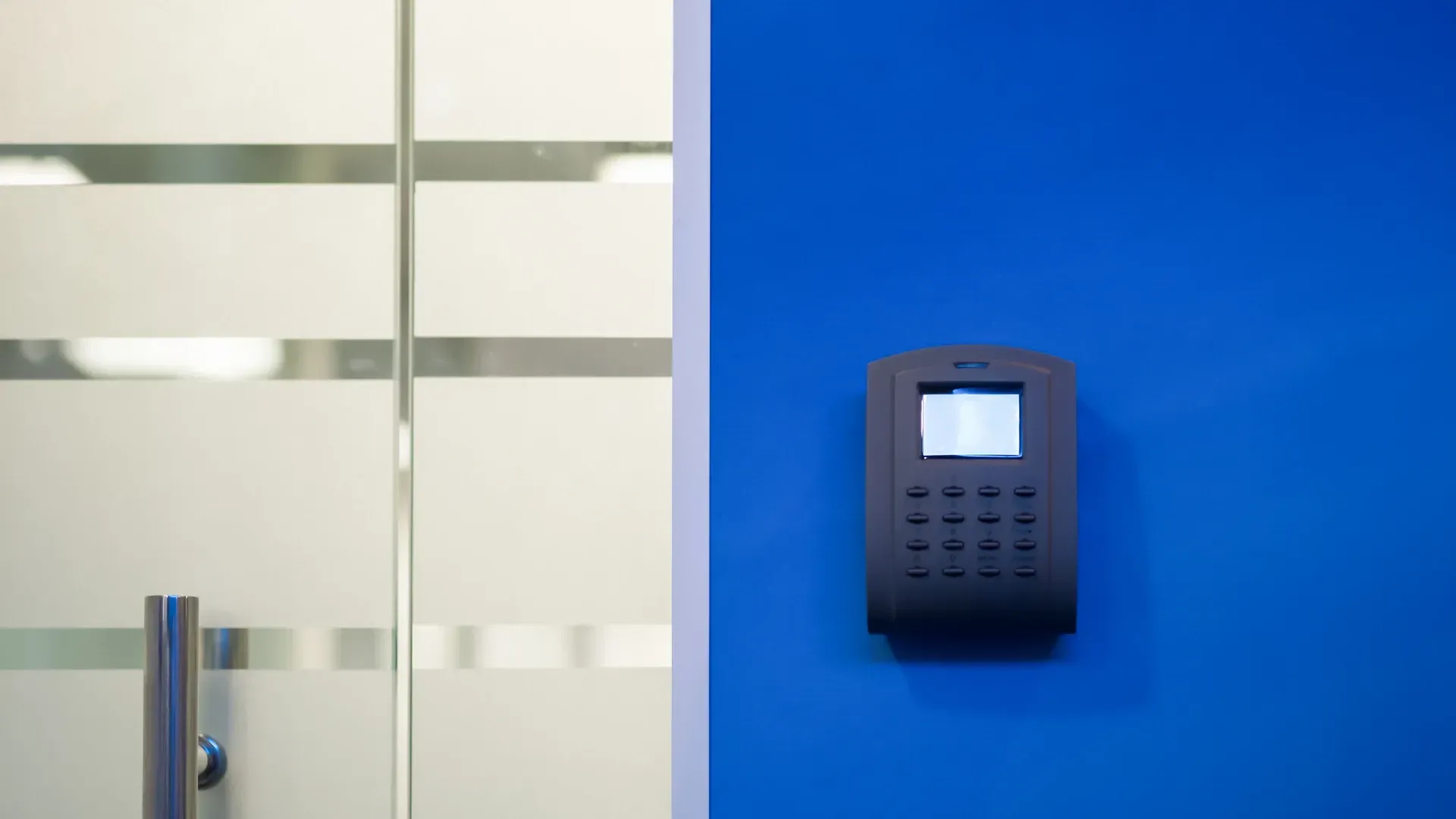
door access system does more than control who can enter a building — it generates a continuous record of activity across every access point it manages. That record is only useful if you can read it, act on it, and produce it when someone asks.
For condominium committees, office administrators, and business operators across Malaysia, the hardware is rarely the gap. The gap is usually in monitoring, reporting, and the ability to account for what has happened — and when. Security consultants and insurers increasingly ask for this evidence too. A system that locks a door but cannot tell you who has passed through it is not fully doing its job.
This article sets out the reporting and monitoring features that a well-configured door access system should provide — and the questions worth asking before you invest in one.
Why Monitoring Capabilities Matter More Than You Think
You may have a door access system installed and assume it is working as intended. But if you cannot see what it is logging, you have no reliable way to confirm that.
Access control monitoring, in practical terms, means the ability to observe and review entry events as they occur and after the fact. It is the difference between a system that acts as a barrier and one that also functions as an evidence trail.
| Data point | What it records |
|---|---|
| User identity | Who presented the credential |
| Access point | Which door or entry point was used |
| Timestamp | Exact date and time of the attempt |
| Credential type | Card, PIN, biometric, or mobile |
| Outcome | Granted or denied |
Without this data layer, the features described below have nothing to draw from. If your current system does not surface this information clearly, ask your provider whether it is a configuration issue or a hardware limitation. In most cases it can be resolved — but knowing which it is matters before taking any next step.
What Entry Log Reports Should Tell You
If you have ever needed to investigate an incident — a suspected breach, a missing item, or a staff dispute — you will know within minutes whether your system produces useful entry log reports or not.
The value of detailed access history is not theoretical. It is what determines whether an investigation has a starting point or has to proceed on assumption. So what should a well-configured report actually show?
- Who accessed the door (name or credential ID)
- Which door or access point was used
- The exact time and date of the event
- Which credential was presented (card, PIN, biometric)
- Whether access was granted or denied
This data supports 2 distinct use cases. For day-to-day facilities management, it helps track movement patterns and identify anomalies. For formal compliance reporting — which is increasingly expected of corporate tenants and audited environments — it provides the audit trail door access compliance requires.
Exportability matters too. Reports that cannot be downloaded as a spreadsheet or PDF have limited practical value. Check whether your system supports both scheduled and on-demand report generation — a system that only offers one may leave gaps.
For properties using door access systems in Malaysia alongside CCTV, this data can be cross-referenced with camera timestamps. That significantly strengthens any incident review.
Not sure whether your current system is producing the access data it should be? A professional review of your access control configuration can identify gaps before they become problems.
Find out what a monitoring assessment covers.
Real-Time Alerts and What They Should Trigger
There is a meaningful difference between a system that records what happened and one that tells you about it as it happens.
Consider the scenario: a door is forced open at 2am, or an access attempt is made using a revoked credential. The question is whether anyone finds out immediately — or discovers it the following morning when reviewing logs.
| Alert type | What it signals |
|---|---|
| Forced door open | Physical breach attempted or achieved |
| Door held open too long | Propped door, tailgating risk, or hardware fault |
| Repeated failed attempts | Credential testing or targeted breach attempt |
| Activity outside permitted hours | After-hours access by unauthorised credential |
| Revoked credential used | Former staff or visitor attempting entry |
These alerts should be configurable. Configuring alerts to fire on every standard entry event is counterproductive — it trains the people responsible to ignore them. The goal is a signal-to-noise ratio that means every alert is taken seriously.
How Smart Access Features Give You Better Oversight
As a property or business grows, managing access manually becomes impractical. 3 capabilities make oversight scalable without adding administrative burden.
- Cloud-based access control allows administrators to manage permissions, review logs, and respond to alerts from any location — via browser or mobile app — without being physically present at the site. For condominium management offices and multi-site businesses, this is a significant operational advantage.
- Time-based access permissions allow specific credentials to be valid only during defined windows. A contractor's card might only work on weekdays during business hours; a cleaning team's access might be limited to certain floors. Either way, exposure is limited without requiring manual revocation each time.
- A multi-door access dashboard gives facilities managers and condominium committees a single view of activity across all entry points. Managing this from one interface — rather than reviewing each door separately — reduces administrative time and the likelihood of something being missed.
Door access systems in Malaysia increasingly include these capabilities as standard — but configuration still requires attention. Good hardware without a centralised dashboard is still a fragmented oversight model. If your current setup would become unmanageable with twice the users or a second building, that is a signal worth acting on sooner rather than later.
7 Questions to Ask Before Choosing Your Door Access System
Before signing off on any door access system in Malaysia, ask a few direct questions about its monitoring and reporting capabilities — not just its hardware specifications.
- Can the system produce scheduled reports automatically, without manual intervention?
- Are real-time alerts configurable by door, user group, or time window?
- Does the software integrate with your existing CCTV or alarm system?
- What happens to your access logs if the system goes offline or needs to be replaced?
- Can access history be exported in a usable format such as CSV or PDF?
- Is remote management available via mobile or browser?
- Can the system scale if your user count or site count increases?
These are not unreasonable questions. A provider who cannot answer them clearly is telling you something important about the level of support you will receive after installation — and the limitations you will inherit if you proceed.
Ongoing support and servicing are also worth confirming with any provider. Access control systems require periodic maintenance — and monitoring functions are often the first to degrade when that maintenance is deferred.
Find Out If Your System Is Giving You Enough
At The One Control, we are dedicated to strengthening layered security for Malaysian properties — bringing together access control, surveillance, and smart monitoring solutions that evolve with changing risks and compliance needs.
Speak to our team about door access solutions — and find out whether your current system is giving you the monitoring and reporting capability your property actually needs.
Book a free consultation for the most dependable solutions for door access in Malaysia.