
How Gate Weight Affects Autogate Motor Selection in Malaysia
TL;DR:
- Tubing gauge, bending profiles, and panel count all determine how much your finished gate weighs.
- Aluminium is substantially lighter than mild steel for the same hollow section dimensions, which means less motor load.
- Gate type changes how load reaches the motor, not just how much load there is.
- A motor running above its rated capacity will overheat, wear faster, and eventually need full replacement.
- Confirm your gate’s fabricated weight before motor selection, not after installation begins.
A fabricator quote lands in your inbox. The autogate design looks right, the price is acceptable, and near the bottom, there is a line about an autogate motor. Most homeowners approve it without much thought. The motor gets specified after the gate, as an afterthought, and the 2 are never formally checked against each other.
That gap, between what the gate weighs and what the motor is rated to handle, is a common cause of early autogate motor failure across Malaysia. Tubing thickness, bending profile complexity, and the number of panels all contribute to total gate weight.
That weight is what your autogate motor will move on every open and close cycle for the life of the system. Knowing what shapes that weight, before fabrication is finalised, is what keeps the 2 properly matched.
How Gate Metal Gauge Selection Affects Your Autogate’s Total Weight in Malaysia
In Malaysia, custom residential gates are commonly fabricated from mild steel or aluminium hollow section tubing. The gauge of that tubing (its wall thickness) is one of the biggest factors determining how much the finished gate will weigh, and it varies widely between local fabricators.
Before fabrication begins, these are the points worth understanding:
- A thicker-gauge gate will weigh significantly more than a thinner one of the same size and design.
- That extra weight is not always visible once the gate is painted and installed, but your autogate motor will register every kilogram of it on every cycle.
- Mild steel and aluminium differ substantially in weight for the same hollow section tube dimensions. Lighter material means less motor load over time.
- A mild steel gauge chart can help you and your installer estimate gate weight before fabrication, using the tubing dimensions and total gate area.
Before you move to motor selection, confirm the fabricated gate weight with your fabricator in writing.
The Hidden Weight Behind Decorative Gate Bending Profiles
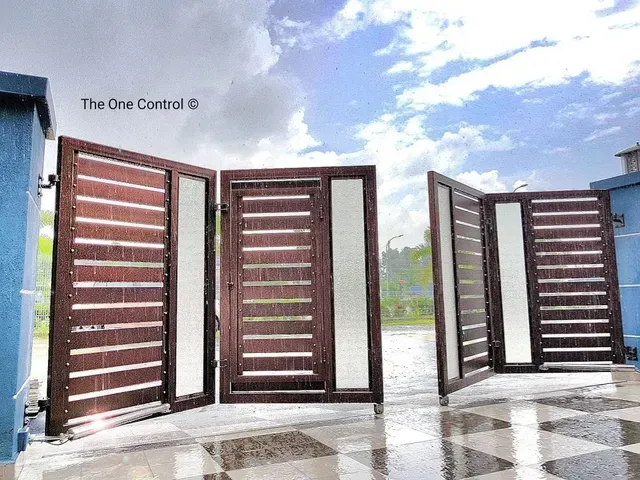
A flat-bar gate and a heavily profiled decorative gate of the same dimensions can differ meaningfully in total weight, even when both use the same tubing gauge. As a general rule of fabrication, decorative bending profiles (the curved and angled metal elements that give a custom gate its character) add material, and that material adds weight.
The table below shows how profile complexity translates into practical differences for motor load:
| Gate Panel Type | Profile Complexity | Relative Weight | Motor Implication |
|---|---|---|---|
| Flat bar / plain panel | Minimal | Lightest | Standard motor may be sufficient |
| Single-curve bending profile | Low to moderate | Moderate | Confirm motor rating against finished weight |
| Multi-curve or intricate bending | High | Heavier | Heavy-duty motor often required |
| Solid infill or combined panel | Varies | Heaviest | Professional weight calculation essential |
The more intricate the bending pattern, the more weight your autogate motor must move on every cycle. A motor selected before the final design is confirmed may end up undersized once fabrication is complete.
Get the estimated finished weight confirmed before selecting a motor. A rough sketch is not enough. The fabricated weight is what counts.
Does Gate Type Change What Motor You Need?
Once you have a sense of your gate's design complexity, the next variable is gate type. Swing arm, sliding, and folding autogates each place a different kind of load on their motors. The same gate weight behaves differently depending on how the gate moves.
Here is how the 3 gate types compare on motor compatibility:
| Gate Type | How Load Is Applied | Key Weight Consideration | Motor Requirement |
|---|---|---|---|
| Swing arm | Full leaf weight on every open/close cycle | Weight per leaf and distribution across motor arm | Torque-rated for leaf weight at full extension |
| Sliding | Gate dragged horizontally along a track | Total gate weight along track length | Motor rated for sustained horizontal load |
| Folding | Weight distributed across panels and hinges | Weight per leaf plus hinge mechanics | Motor matched to panel weight and folding resistance |
For sliding gates, the total weight along the track is the critical figure. For swing arm and folding autogates, the weight per leaf and how it is distributed across the motor arm determines the right motor rating.
When you choose a gate type, confirm with your installer how the gate’s total fabricated weight translates into motor load for that specific system. The compatibility question is not just about total weight, but also about how that weight moves.
Choosing the Right Heavy-Duty Autogate Motor in Malaysia
Once gate type and weight are both confirmed, the motor selection question becomes more straightforward.
A heavy-duty autogate motor is not simply a more expensive version of a standard one. It is rated to handle higher torque loads continuously without overheating. For custom gates that run heavier than typical residential gates, a heavy-duty motor is often the correct starting point, not an upgrade.
Here is what a qualified installer should be assessing before recommending a motor for a custom gate:
| Factor | Why It Matters |
|---|---|
| Estimated finished gate weight | Sets the minimum motor torque requirement |
| Gate type (swing / sliding / folding) | Determines how load is applied to the motor |
| Daily usage frequency | Higher cycles require a higher-rated duty cycle |
| Safety margin above gate weight | Protects the motor from running at its rated limit continuously |
| Power supply compatibility | Ensures stable operation under Malaysian conditions |
If you already have a fabricated gate and are looking to add automation, bring the gate’s dimensions and materials to your consultation. A professional autogate installer can calculate a reliable weight estimate and match it to the right motor before installation begins.
Gate weight and motor rating need to be confirmed together, and the earlier in the process, the better.
Get a weight estimate via WhatsApp before fabrication is finalised.
What Happens When Your Autogate Motor Exceeds Its Weight Capacity?
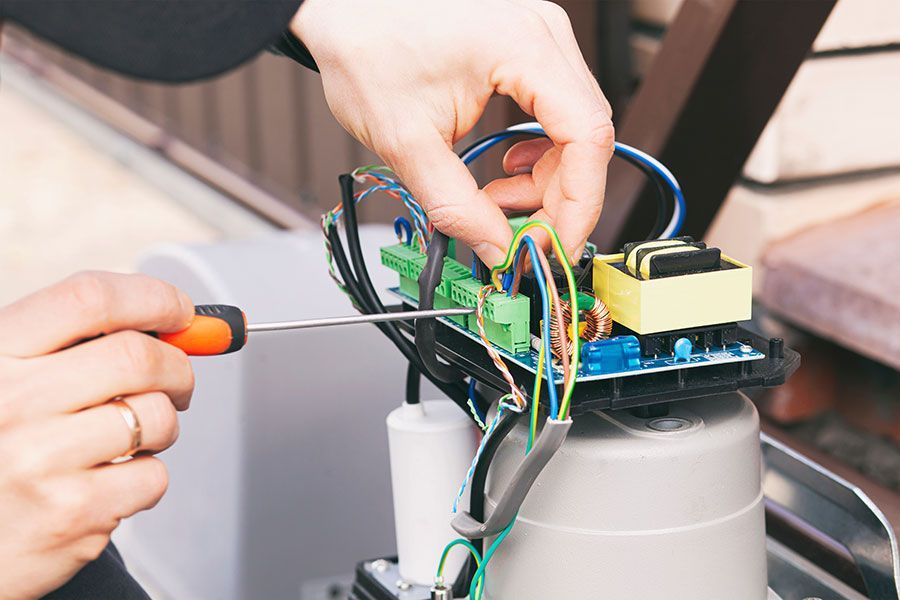
An autogate motor asked to move a gate heavier than its rated capacity will overheat. The consequences build over time:
- Each cycle strains the motor beyond its design limits, accelerating wear on internal components.
- Failure is not always immediate. A slightly undersized motor may run for months before the accumulated strain causes a breakdown, at which point a replacement is usually necessary.
- Motor burnout on a heavy custom gate typically requires a full replacement, not a repair. That cost is substantially higher than selecting the right motor from the start.
- A motor operating beyond its weight capacity may also trigger overload protection and stop mid-cycle, leaving the gate partially open until the system is reset.
Matching your motor’s rated capacity to your gate’s actual finished weight is the only reliable way to protect your investment and avoid early motor failure. If you are already experiencing motor issues, a professional autogate repair service covers diagnosis and motor replacement across Klang Valley.
It is worth checking which autogate properly matches your current setup, now rather than later.
Get in touch with The One Control, and the team will assess your gate and motor combination.
Steps to Prevent Autogate Motor Failure Before Installation
The most common reason autogate motors fail ahead of schedule is not a manufacturing defect. It is a mismatch between gate weight and motor capacity that catches many autogate owners off guard at the point of installation. Catching this before installation costs nothing. Correcting it after is a different matter entirely.
Before your system goes in, work through these checks:
| Check | Why It Matters |
|---|---|
| Get the fabricated gate weight from your fabricator and document it | The figure must be recorded before any motor is ordered |
| Verify the motor's rated capacity exceeds that figure | The motor's limit should include a reasonable safety margin above actual gate weight |
| Confirm the motor rating suits your gate type | A torque rating for a swing arm autogate is not automatically right for a sliding gate of the same weight |
| Factor in usage frequency | A gate cycling 20 times a day places a different long-term load on a motor than one used 4 times a day |
| Ask your installer about overload protection | A properly specified system should include motor protection settings calibrated to your gate's weight |
A consultation with a qualified autogate installer in Malaysia is the simplest way to confirm your gate and motor are properly matched. That is the conversation to have before the first bolt is tightened.
Get the Right Autogate System in Malaysia from The One Control
Custom gates are not one-size-fits-all, and neither are the motors that run them. Getting the pairing right from the start is the difference between a system that runs reliably for years and one that needs repairing within months.
The One Control has over 20 years of experience supplying and installing autogate systems across Malaysia. Whether you are planning a new installation or your existing motor is showing signs of strain, the team can assess your setup and match it to the right system.
Book a consultation today or reach the team directly via WhatsApp at 012-205 3763.